How to Keep a Drink Journal (and Why It's Worth It)
The simplest way to stop forgetting what you loved: five small fields, filled out before the night moves on.
A drink journal is a running record of what you drink and whether you would have it again. Keep it to five fields: the name, the place, one flavor word, a rating, and the date. Log it the moment you finish, while the memory is sharp. Done right it takes about ten seconds a glass, and it is the difference between a vague hunch and a list you can actually trust.
Drinqly is a free download for iPhone.
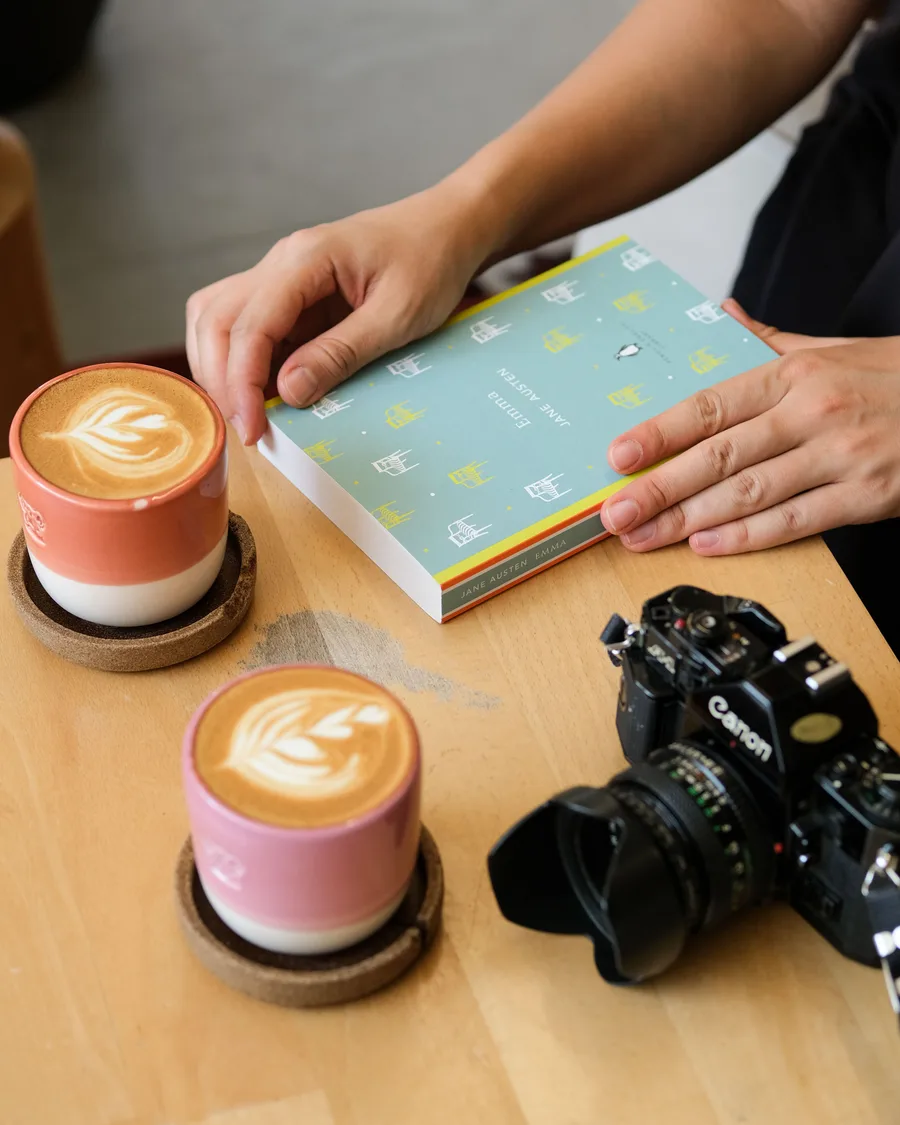
Get Drinqly on the App StoreWhen I started building Drinqly, I went digging through my camera roll and found something I didn't expect. I was already keeping a drink journal, I just didn't know it. Over 400 photos of drinks, going back years. I can't remember the drinks themselves, but I can open any one of those pictures and tell you instantly where I was, who I was with, and what made that night worth keeping. Whether the drink itself was any good is a coin flip. Everything around it, I still have. A drink journal is only that habit made searchable, knowing how to angle the shot so the background of the drink helps you remember everything about that night.
What a drink journal actually is
A drink journal is a running record of what you drink, what it tasted like, and whether it was worth it. That's the whole idea. There's nothing to grade and no deadline on it. You keep it so the next round is a better one. Think of it the way a reader keeps a list of the books they finished, or a cook keeps the recipes that worked: a small archive of your own taste that gets more useful the longer you feed it.
The payoff compounds. Ten entries is a handful of notes. A hundred is a map of what you actually like, who makes it, and where to find it again.
Why bother writing it down
Because memory is worse than you think, and fastest to fail exactly where you want it most. It fades fast. Work going back to Hermann Ebbinghaus, replicated in modern labs, shows new detail falls off a cliff almost immediately: you lose around half within an hour and close to 70 percent within a single day unless something locks it in. The pour you swore you'd remember is on that curve too.
There's a second, quieter reason. The act of writing something down is itself what makes it stick. Research on note-taking found that people who summarize in their own words, rather than transcribe, remember the material better later, because putting a thing into your own language forces you to process it. Naming a drink "bitter, like grapefruit pith" does the same work a good note does: it turns a passing sensation into something your brain can file and find again.
The five things worth writing down
You don't need a tasting-room form. Five fields do, the kind you can fill in without thinking, every time.
- The name. As specific as you can manage. The brewery and the beer, the grape or the producer, the actual name off the menu. "Barolo" will find its way back to you a year later. "Red wine" finds you nothing.
- Where you had it. The bar, the shop, a friend's place. Half of wanting a drink again is being able to get back to it.
- One flavor word. One honest word you would stand behind: smoke, green apple, bitter orange, dried fig. One real note beats five borrowed off the label.
- A rating. Even a rough one. Ratings are what let you come back a year later and see only the things you loved.
- The date. So a scattering of nights becomes a timeline you can actually read.
A quick photo of the glass or the label carries more than a paragraph and takes a second. Your phone already timestamps and place-stamps it, so even a lazy photo is half an entry on its own.
When to log it
In the moment, while the glass is still in front of you. Log it now. This is the single rule that decides whether a journal works. If you wait until you're home, you're writing against the forgetting curve, filling in blanks with guesses. Do it at the table and the detail is free: the flavor word is right there on your tongue, and the name is on the menu you're holding.
A useful trigger: the moment you set the empty glass down. Tie the entry to something you already do, and it stops being a thing to remember and starts being part of the round.
| Paper notebook | Notes app | Camera roll | Drinqly | |
|---|---|---|---|---|
| Speed per entry | Slow | Medium | Fast | Three taps |
| Searchable later | No | Barely | Buried | Yes, by name |
| Sort by rating | No | No | No | Built in |
| Has the photo | No | If you attach it | Yes | Yes |
| Survives two weeks | Rarely | Rarely | By accident | Habit-sized |
Any of these beats nothing. A paper notebook is romantic and almost never survives a busy bar; a notes app works if you're unusually disciplined. What a purpose-built journal really wins on is friction. When an entry costs three taps instead of a paragraph, you actually do it.
How to keep the habit
Most journals die in week two, and always for the same reason: the entries got long. Keep yours small on purpose. One flavor word will do. A rough rating is plenty. You're building a streak, and a streak is built from entries so quick you never dread them. Ten honest seconds a glass, done every time, will always beat the beautiful three-paragraph entry you write once and never write again.
Two more things help. First, do the careful tasting early, when your palate is sharpest; the first couple of drinks are when the notes are worth most. Second, let the journal pull its own weight: when it can show you what you rated highly, or what is good near you, logging stops feeling like deposits into a box you never open and starts paying you back.
Common questions
What is a drink journal?
What should I write in a drink journal?
Is a notes app good enough?
How do I keep up the habit?
A drink journal asks less than the word suggests. Five small fields, filled out before the night moves on, repeated until you have a record of your own taste worth trusting. Keep it tiny. The only real hurdle is remembering to write it down, and the fix is to make each entry too small to dread. If you want logging that takes three taps, with the photo, rating, and place handled for you, that's what Drinqly is built to do.
Start your drink journal tonight.
Get Drinqly on the App StoreSources
- Replication and analysis of the Ebbinghaus forgetting curve · PMC, 2015. New detail decays steeply within hours to a day.
- The Pen Is Mightier Than the Keyboard · Mueller & Oppenheimer, Psychological Science, 2014. Summarizing in your own words aids retention.
- The Wine Aroma Wheel · Ann C. Noble, UC Davis. A vocabulary that runs general to specific, for naming one note.
- Australian Wine Research Institute · on palate fatigue: do the careful tasting and logging early.