How to Taste a Drink Like You Mean It (and Actually Remember It)
Work through a glass with your senses in order, name one honest thing, and still have it by morning.
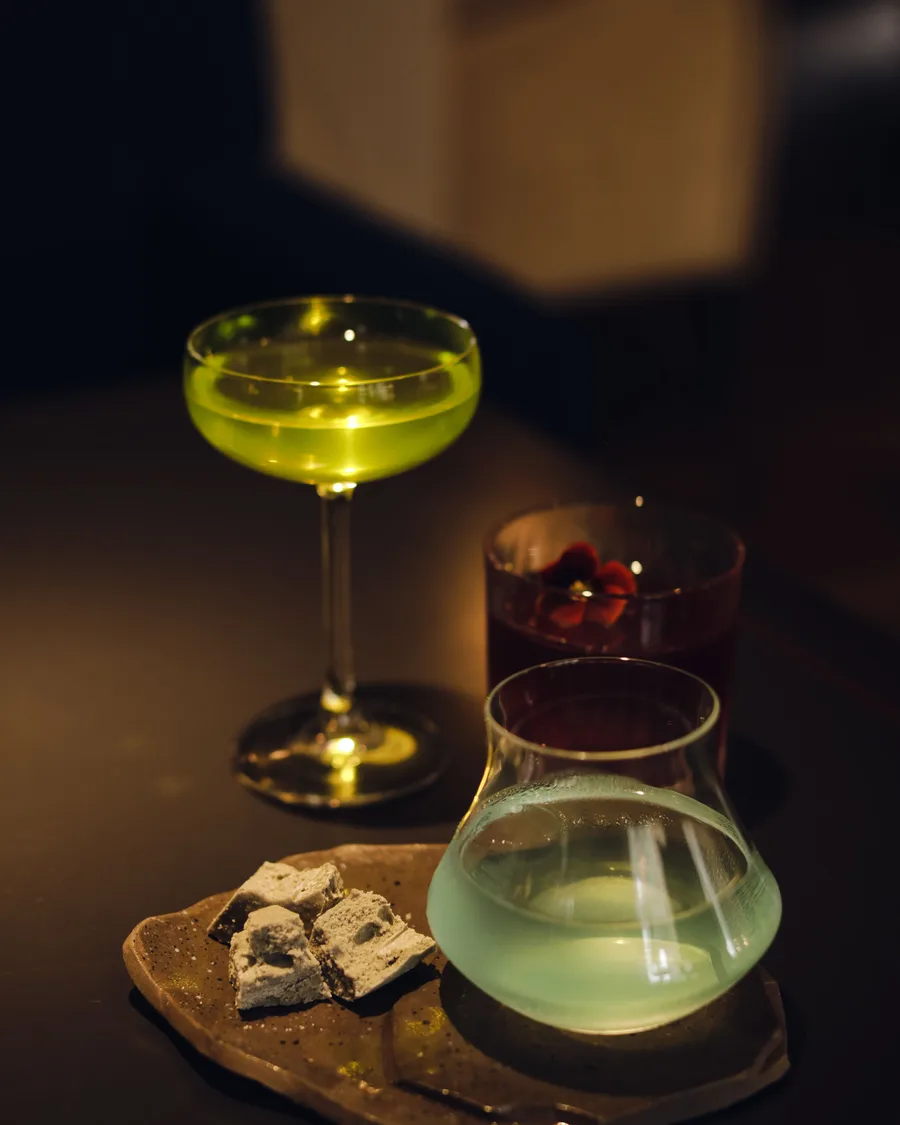
To taste a drink well, slow down for four steps: look at it, smell it twice, take a small sip and hold it, then name one thing you notice. Most of flavor is actually aroma, so the smelling matters more than the swallowing. Then write it down before the memory fades.
Drinqly is a free download for iPhone.
Get Drinqly on the App StoreThe best drinks I ever had came from a moody little lounge in downtown Meridian, made by a bartender named Adam, who I'm fairly certain is the best mixologist in Idaho. I won't admit how many espresso martinis I bought from him (ok, honestly, I think I had five in one night one time??). Here is my ONE RULE about an espresso martini that infuriates me when people do this: most people drown it in cream until you can't taste it at all. I want the espresso. Adam built his so the espresso was the whole point, nothing hiding it, just vodka and coffee daring you to notice. Tasting a drink is only paying attention to what's actually in the glass instead of swallowing it on autopilot. This is a field guide to doing exactly that: work a glass with your senses in order, name what's there, and keep the pours worth keeping. If you don't drink for the taste, this definitely isn't for you.
Flavor is mostly smell
Your tongue is a blunt instrument. The nose does the rest. Your tongue reads sweet, sour, salty, bitter, savory, and little else. Everything you think of as the taste of a drink, the espresso in that martini, the citrus in a gin, the cherry in a Manhattan, arrives through your nose. Sensory researchers estimate that roughly 80% of flavor is smell rather than taste, delivered through a back channel called retronasal olfaction as aroma rises from your mouth into your nasal cavity. The practical lesson is simple: if you're not smelling, you're barely tasting.
That range isn't a rounding error. A widely cited 2014 study estimated that the average nose can distinguish at least one trillion different odors. You already own the most sensitive instrument in the room. The skill is learning to point it at the glass on purpose.
The four-step pour
You don't need a sommelier certification to taste well. You need a short ritual you run every time. It takes two minutes. This is the one I use on everything, from a mezcal to a hazy IPA to a flat white.
- Look. Tilt the glass against a light surface. Adam's espresso martini was nearly black with a thin tan foam on top, which already told me the espresso was going to lead, not hide behind cream. Color and clarity hint at age, body, and how a drink was made before you smell a thing.
- Smell, twice. A short sniff, then a longer one with your mouth slightly open. The first read is loud and obvious, the vodka up front. The second finds the quieter notes underneath, the dark-roast bitterness sitting right behind it.
- Sip and hold. Take less than you want. Let it sit on the middle of your tongue for a few seconds and breathe out gently through your nose so the aroma loops back around. Pay attention to the finish, the part that lingers after you swallow.
- Name one thing. Not ten. One honest word you would stand behind: green apple, smoke, pepper, dried fig. For that martini it was scorched sugar. Naming is what moves a drink from a feeling into a memory.
Smelling with your lips parted pulls a little air across the drink and lets more aroma reach the back of your nose. It looks slightly odd and it works. Try the same pour with your mouth closed, then open, and feel the difference.
Why you forget the good ones
Here's the uncomfortable part. Tasting carefully is wasted if the memory evaporates by breakfast, and it usually does. Work going back to Hermann Ebbinghaus, replicated in modern labs, shows memory falls off a cliff right after you form it: you lose around half of new detail within an hour and close to 70 percent within a single day unless something locks it in. The wine you swore you'd remember is on that curve too.
Indicative figures based on Ebbinghaus forgetting-curve research and modern replications. Source: PMC, 2015.
The fix is a small act of reinforcement at the moment of tasting. Snap the label, give it a rating, write the one word you named. That single step pins the memory in place before the curve does its work, which is the whole reason a drink journal beats good intentions. That espresso martini survived only because I logged it at the table.
| Captures… | Just memory | Notes app | Camera roll | Drinqly |
|---|---|---|---|---|
| What you tasted | Fades fast | If you type it | Photo only | Photo, rating, tags |
| Findable a year later | No | Rarely | Buried | Searchable timeline |
| Rating & context | In your head | Manual | No | Built in |
| Shows what is good nearby | No | No | No | Yes |
| Effort per drink | None, but lost | High | Low | Three taps |
A notes app works if you're disciplined. Discipline is rare. Most people open the notes app twice and never again, which is the gap a purpose-built journal closes.
Build a vocabulary that sticks
Naming gets easier when you have words ready. The wheel helps. In 1984 the UC Davis sensory scientist Ann Noble built the Wine Aroma Wheel for exactly this problem: tasters could feel a flavor but had no shared language for it. It runs from general to specific in three rings. You start in the center with something broad like fruity, step out to a family like berry, then land on the exact note, raspberry. The same move works for that smoky mezcal or a hazy IPA. Go broad, then narrow, then commit to one word.
Don't taste past your palate
Tasting has a budget. After a string of pours your senses adapt and everything starts to blur together, an effect tasting rooms call palate fatigue. The Australian Wine Research Institute advises serving no more than six to seven samples in a sitting before a real rest. The takeaway for a night out: your first two or three drinks are when your palate is sharpest, so that's when the careful tasting and the logging pay off most. By round five you're drinking for the company, and your notes will read like it.
Common questions
How do you taste a drink properly?
How do I develop my palate?
Why can't I remember wines or cocktails I liked?
What is palate fatigue and how do I avoid it?
Is keeping a drink journal worth it?
Tasting well is a small set of habits: slow down, smell first, name one thing, and write it down before it fades. The last step is the one almost everyone skips, and it's the one that turns a good night into something you can look back on. If you want the logging to take three taps instead of a paragraph, that's exactly what Drinqly is built for.
Log the next thing you pour.
Get Drinqly on the App StoreSources
- Just how much of what we taste derives from smell? · "Roughly 80% of what we perceive as flavor comes from smell rather than taste."
- Humans can distinguish at least one trillion odors · Science, 2014.
- Replication and analysis of the Ebbinghaus forgetting curve · PMC, 2015.
- Australian Wine Research Institute · practical sensory evaluation: a maximum of six to seven wines per session.
- The Wine Aroma Wheel · Ann C. Noble, UC Davis. Descriptors run general to specific.