The 10 Tasting Words That Make You Sound Like You Know Wine
A starter vocabulary that actually means something, plus when each word applies and, just as important, when it does not.
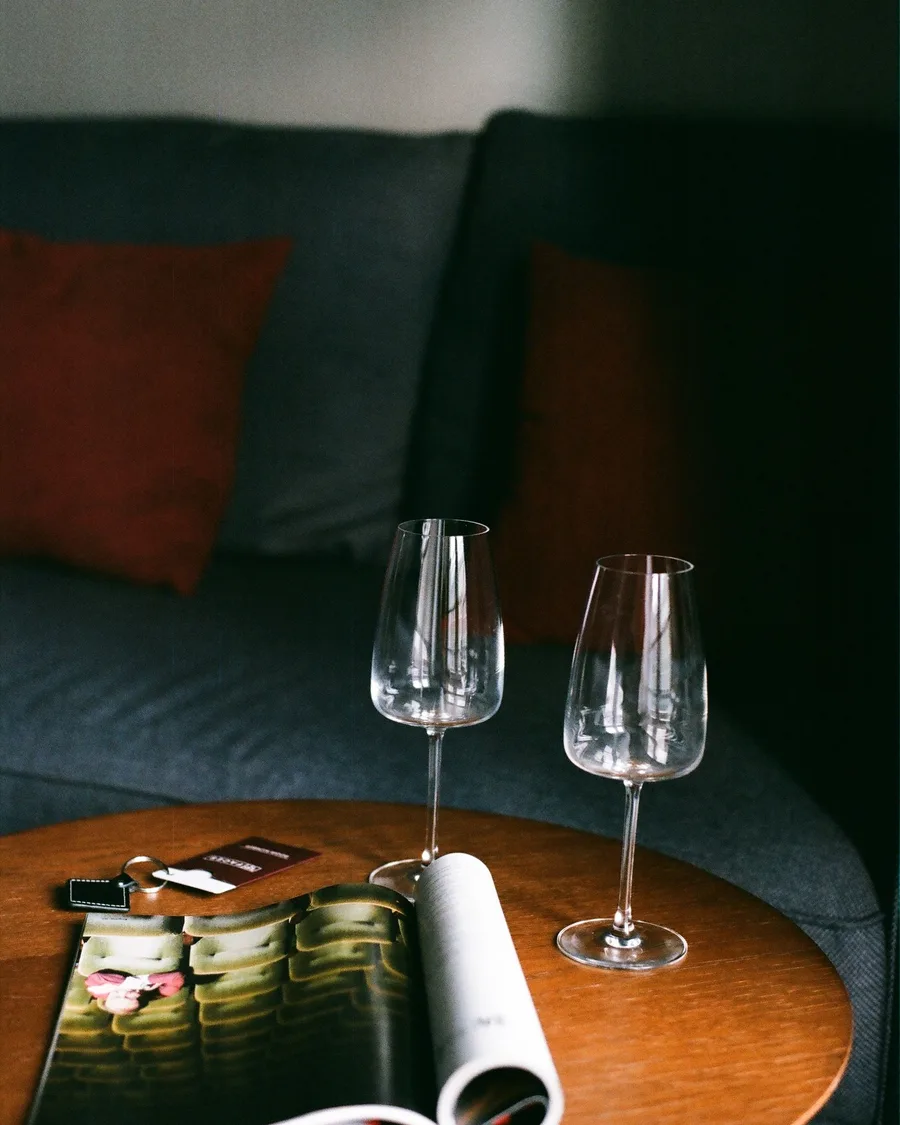
The words that make you sound like you know wine describe structure you can feel in your mouth: dry, acidity, tannin, body, finish, oaky, jammy, earthy, minerality, and balanced. Each one names a real sensation, so used honestly they make you sound like you are paying attention. That is the whole trick.
Drinqly is a free download for iPhone.
Get Drinqly on the App StoreThe waiter pours a splash, the table goes quiet, and everyone waits for you to say something about it. You swirl. You sniff. And what comes out is the word that comes out of almost everyone in that moment: "smooth." It's the tasting equivalent of calling a meal "nice," it doesn't actually describe anything, and I'm just as guilty of it as the next person. A table full of people nodding along at "smooth" is a table where nobody's said a single real thing about the drink.
Here's what actually separates the people who sound like they know wine from the rest of us fumbling for a word. It's rarely a bigger fruit vocabulary. Anyone can guess "blackcurrant" and hope. The real giveaway is using a word for a thing it doesn't describe, like calling a flavor "tannic." So below are ten words that each point at a sensation you can genuinely feel in your mouth, with a plain meaning, a specific drink to try it on, and my honest take on when the word earns its place and when it hangs you out to dry.
The ten words, and when to actually use them
Read each one, then try it on the next glass in front of you. The note underneath matters as much as the meaning, because half of sounding credible is knowing when a word doesn't fit. Say less. Mean it.
-
Dry the opposite of sweet
Dry means little or no sugar left in the glass. People mix it up with tannic or harsh constantly, and that swap is the giveaway. A bone-dry Sauvignon Blanc and a sweet Riesling can carry the exact same jolt of acidity, which throws everyone the first time they taste the two side by side.
Use it when a wine simply isn't sweet, like a Chablis. Skip it when you mean grippy or astringent. That's tannin. -
Acidity the bright, mouthwatering tartness
Acidity is what makes your mouth water and a young wine feel alive. Bite a green apple, or picture a squeeze of lemon over fish. A Sancerre or a good Champagne runs almost entirely on it. Low acidity reads as soft or flabby; high acidity reads as crisp and zippy.
Use it when a white or sparkling makes you salivate. Skip it when the wine feels round and heavy on the tongue. That reads as low acid. -
Tannin the drying grip
Tannin is a texture, and it's the word beginners misuse the most. It's the drying, faintly furry grip on your gums, the same feeling as over-steeped black tea. It comes from grape skins, seeds, and oak, so it lives in reds and barrel-aged wines. A young Nebbiolo will practically sand your teeth.
Use it when a red dries your mouth out, like a Cabernet. Skip it when you're drinking most whites. They have almost none. -
Body the weight on your tongue
Body is how heavy a wine feels, on a scale from skim milk to cream. Pour a light Pinot Noir next to a full Napa Cabernet and you feel the difference in one sip. Alcohol and ripeness push it up. Warm-climate wines tend to feel bigger.
Use it when you compare how heavy two wines feel. Skip it when you actually mean flavor intensity. That's a separate axis. -
Finish how long it lingers
The finish is how long the taste hangs around after you swallow, counted loosely in seconds. A long, evolving finish is one of the clearest signs of a good bottle, which makes this the easiest honest compliment you can pay a wine. A serious Barolo can hold for half a minute.
Use it when the flavor keeps unfolding after you swallow. Skip it when it vanishes on contact. Then it's short. -
Oaky vanilla, baking spice, toast
Oak aging leaves vanilla, clove, coconut, smoke, or toast, plus a rounder feel. A buttery California Chardonnay is the textbook case, and plenty of drinkers love it or loathe it with equal heat. It's a winemaker's fingerprint. The grape never smelled like vanilla on its own.
Use it when you smell vanilla or toast that the fruit can't explain. Skip it when the wine is fresh and unoaked, like a steely Muscadet. -
Jammy cooked, super-ripe fruit
Jammy means the fruit tastes cooked and concentrated, closer to preserves than to fresh-picked berries, usually from very ripe grapes in a hot vintage. Big Zinfandels and Aussie Shiraz are the usual suspects. Some drinkers find it gorgeous. Purists roll their eyes.
Use it when the fruit reads like jam in the glass. Skip it when the wine is tart and fresh. That's the far end of the dial. -
Earthy forest floor, mushroom, soil
Earthy covers the savory, non-fruit smells: damp soil, dried leaves, mushroom, a whiff of barnyard funk. It turns up in old-world reds like a village Burgundy, and used well it signals that you're tasting past the fruit. Used badly it signals that you smelled a rumor.
Use it when something savory sits underneath the fruit. Skip it when the wine is bright and purely fruity. Then you're reaching. -
Minerality flinty, wet stone, saline
A flinty, wet-stone, or briny impression, most often in lean whites like Chablis or Muscadet. Careful with this one. It's the most argued-over word in the room. Studies find that tasters rarely agree on what it even means, so it's the term most likely to expose a guess.
Use it when nothing more precise fits a lean, stony white. Skip it when you can name an actual fruit or herb. Name that instead. -
Balanced nothing sticks out
Balanced means no single element, not the acid, not the sugar, not the alcohol, not the tannin, not the fruit, jumps out ahead of the rest. It's the word professionals reach for more than any other, because it describes how the pieces sit together. If you walk away with one word, make it this one.
Use it when everything feels in proportion, like a well-made Chianti Classico. Skip it when one thing clearly screams for attention. Name the loud part.
Why structure words win
Notice the pattern. Seven of those ten describe how a wine feels in your mouth. Only three point at fruit. That's deliberate. Fruit is a guessing game with a thousand right answers and no way to check your work, while structure is something your mouth measures directly. You can feel tannin dry your gums. You can feel acidity make you salivate. You can't be wrong about a sensation you're having, so lean on structure and the guessing stops.
This is also exactly how the experts trained. The Wine Aroma Wheel, built by UC Davis scientist Ann Noble in 1984, exists to move tasters from a vague feeling to a specific word, going from broad (fruity) to a family (citrus) to the exact note (grapefruit). The formal WSET tasting grid does the same with structure: it walks you through sweetness, acidity, tannin, body, and finish in order, every single time. Both tools turn a wall of impressions into a short, repeatable checklist.
Use them, but back them up
One warning before you go swirling. These words are tools. The fastest way to sound like you don't know wine is to stack five of them onto a glass you're barely tasting. "A bold, jammy, mineral-driven, oaky, balanced wine" describes nothing at all. One honest word you can defend beats a whole sentence of borrowed ones every time.
At a tasting, commit to a single structure word out loud before anyone else speaks: "lots of grip on that one," or "really long finish." Specific and confident reads as knowledge. Vague and piled-up reads as bluffing.
Common questions
What words should a beginner use to describe wine?
What does tannin mean in wine?
What is the finish of a wine?
Is minerality a real tasting term?
What does balanced mean?
Vocabulary is only half of it. Both halves are learnable. The other half is remembering which word fit which wine after the glass is gone, because a word you can't pin to a memory is just trivia. Name the sensation, then write it down. A few dozen glasses in, these ten words stop being a script you recite and turn into something that's honestly yours.
Put a word on the next glass, and keep it.
Get Drinqly on the App StoreSources
- The Wine Aroma Wheel · Ann C. Noble, UC Davis, 1984. Moves tasters from general to specific descriptors.
- WSET Systematic Approach to Tasting · the structured grid: sweetness, acidity, tannin, body, finish.
- On the meaning of minerality in wine · research showing tasters disagree on the term and its link to soil.
- Just how much of what we taste derives from smell? · why aroma words carry most of a tasting note.